






The views expressed in our content reflect individual perspectives and do not represent the authoritative views of the Baha'i Faith.
There are moments in art when a work does more than tell a story. It invites reflection. It opens space for dialogue. At times, it can even help us see the world, and each other, with greater clarity.
The film Cast Aside the Clouds aspires to be that kind of work—a quiet, searching story that moves beyond entertainment to become a space for moral inquiry and collective understanding.
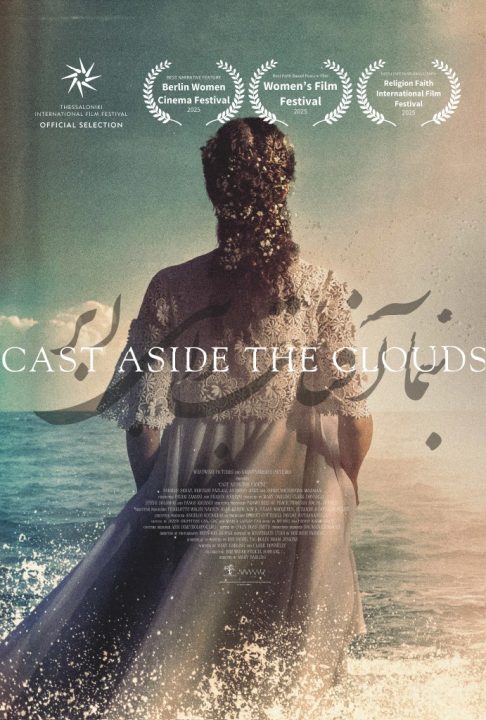
At its center is Layla, a young Bahá’í woman in Iran navigating systemic persecution, and Sasan, a secular doctor shaped by the very structures that oppress her. Their relationship unfolds with tenderness and tension, revealing both the fragility and strength of human connection. When Layla is imprisoned for her faith, the story deepens into a reflection on moral courage, conscience, and the cost of seeing truth clearly.
The story is rooted in Iran, the cradle of the Bahá’í Faith, a land described in the Bahá’í writings as home to “the sore-tried and faithful followers of the Beloved of the world in the Cradle of the Faith” (The Universal House of Justice, 23 August 2022). These words evoke both a profound spiritual heritage and a long history of sacrifice.
One reason we were compelled to tell this story is the role of young people as agents of change. The film highlights how youth can question inherited assumptions, seek truth independently, and overcome entrenched prejudice. Through its depiction of the Bahá’í community in Iran, it reveals the damage caused by religious persecution, one of the most persistent barriers to building a just society. At the same time, it points to resilience, moral courage, and unity in the face of injustice.
Ultimately, the story invites viewers to examine their own assumptions, to think more deeply, and to recognize the capacity of young people to contribute to a more just and compassionate world.
This perspective resonates with the Bahá’í teachings, which place deep trust in the potential of youth.
Yet the film is not only about hardship. It is also about love across divides, the possibility of transformation, and the quiet strength of those who remain steadfast. Bahá’u’lláh wrote:
Be not grieved if thou performest it thyself alone. Let God be all-sufficient for thee. – Gleanings from the Writing of Baha’u’llah, p. 87
This spirit of perseverance is reflected in Layla’s journey. It echoes the experience of many Bahá’ís in Iran, who have endured decades of persecution with dignity, holding fast to their beliefs despite profound challenges.
At the same time, Cast Aside the Clouds reflects a broader shift, not only in the stories we tell, but in how we create them.
For many years, filmmaking has been shaped by control over narrative, production, and audience engagement. Success has often been measured by scale, visibility, and market validation. This project emerged from a different posture, one that values collaboration, openness, and humility.
Rather than presenting the film as a finished product, the process itself invited dialogue. It brought together multiple voices and perspectives, allowing the story to evolve through consultation and shared insight. This approach reflects a central principle of the Bahá’í Faith.
Baha’u’llah wrote:
Consultation is the lamp of guidance which leadeth the way, and is the bestower of understanding. – Tablets of Bahá’u’lláh, p. 59
Consultation requires humility, a recognition that no single perspective is complete. It calls for listening, openness, and a willingness to be transformed by others.
Today, audiences are no longer passive recipients of stories. They engage, question, and contribute to the meaning of what they experience. The conversation surrounding a work has become part of the work itself.
From a Bahá’í perspective, this reflects humanity’s growing capacity for collective learning. As ‘Abdu’l-Bahá wrote:
The shining spark of truth cometh forth only after the clash of differing opinions. – Selections from the Writings of Abdu’l-Baha, p. 36.
Such consultation calls for humility. It invites participants to listen deeply, to set aside attachment to individual viewpoints, and to remain open to truth as it emerges through collective effort.
Storytelling can become one of the spaces where this kind of learning takes shape, where people encounter one another with greater empathy and understanding.
The way Cast Aside the Clouds came into being reflects this same spirit. It was supported by individuals who believed in its message and chose to help bring it to life. This kind of shared effort invites a rethinking of success.
In film, success is often measured in numbers, box office returns, streaming metrics, awards. But another measure may be more enduring. It may be found in the depth of engagement, the quality of relationships formed, and the sincerity of the effort. Bahá’u’lláh wrote:
Let your vision be world-embracing, rather than confined to your own self. – Gleanings from the Writings of Baha’u’llah, p. 29.
There is also a quiet power in the film’s scale. In an industry that often equates significance with spectacle, this story chooses intimacy. It does not try to be louder. It seeks to be more honest. And honesty, grounded in humility, has a way of resonating. As Bahá’u’lláh wrote:
The essence of all that We have revealed for thee is Justice. – Tablets of Bahá’u’lláh, p. 54.
Justice begins within. It requires a willingness to see clearly, to recognize truth, and to act with integrity, even when it is difficult.
Through the journey of its characters, Cast Aside the Clouds invites us to reflect on our own choices. How do we respond to injustice? How do we confront our assumptions? And how might humility open the door to deeper understanding?
Ultimately, the film points to a hopeful possibility. Storytelling itself can contribute to social transformation, not by asserting certainty, but by inspiring new questions and moving us to act differently. As Baha’u’llah wrote:
So powerful is the light of unity that it can illuminate the whole earth. – Gleanings from the Writings of Bahá’u’lláh, p. 90.
In a time often marked by division, even a modest work can help illuminate that light. When humility, unity, and sincerity guide our efforts, and when young people are empowered to act with courage and clarity, new possibilities begin to emerge.
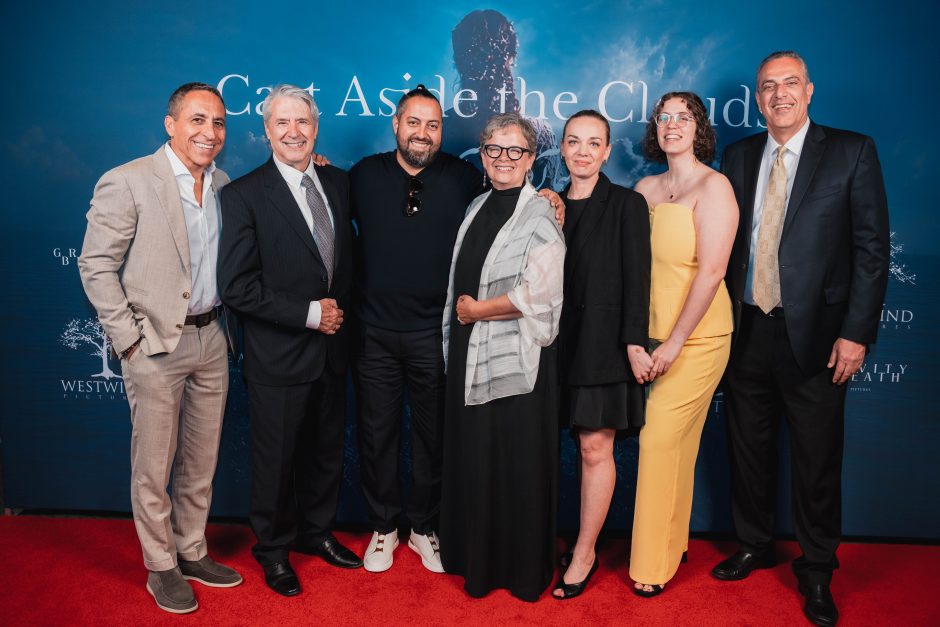

Mary Darling is an award-winning director and producer known for emotionally resonant stories that bridge cultures. Her work spans 700+ hours across 100+ countries, driven by empathy and social impact. That vision has shaped WestWind Pictures, where she has been co-owner since 1999 and helped...
READ MORE
Payam Zamani is an entrepreneur, philanthropist and investor. He is the founder, chairman and CEO of One Planet Group, a hybrid tech firm that runs a suite of online technology and media businesses. The company’s mission is to support strong business ideas while at the...
READ MORE







Comments
Sign in or create an account
Continue with Googleor